At first, this does indeed seem strange. If there are plenty of flowers, it is logical to expect prices to drop. But the flower market works differently. The number of offers alone doesn’t necessarily mean that the varieties you need are available in sufficient quantities.
A large number of offers does not mean there are plenty of the flowers you need.
Every day, hundreds of positions are available on our trading platform directly from farms. However, not all of them are the varieties currently in high demand. Part of the supply has already been allocated to standing orders. Some items may not yet have passed the final quality control check before shipment. There are also varieties that are grown on only a few farms. As a result, the assortment may appear very wide, although finding the right position in the required quantity can be quite difficult.
The market reacts to demand faster than farms can keep up. It is impossible to increase production in just a few days. Growing roses takes time, so farms can not respond instantly to changes in demand. And demand changes much faster. A season begins, a new trend emerges, or simply a few large buyers enter the market at the same time - and that is enough for in-demand positions to quickly disappear from the market and for prices to rise.
Price increases rarely affect the entire product range at once. Typically, varieties with limited production and stable demand are the first to be affected
.
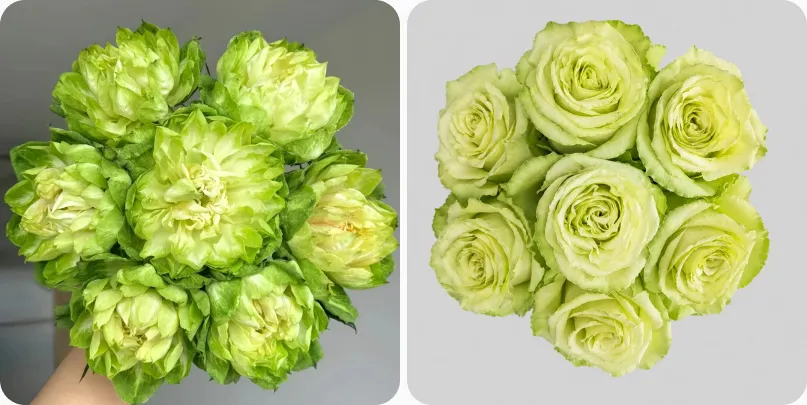
A good example is the Lemonade and Veggie rose varieties. These varieties are grown by a relatively small number of farms, so there is little available supply on the market at any time of year. Lemonade has long maintained a price above average, and Veggie consistently remains one of the most expensive varieties.
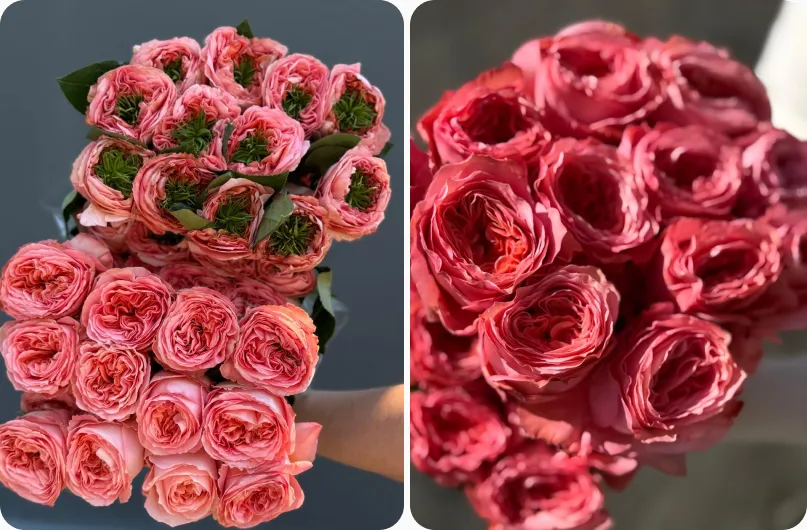
The same situation applies to garden rose varieties. For example, varieties from the X-Pression, Garden, Kiss, Monster Series, Princess Crown, Powder Puff, and Lorena Summerhouse, as well as the exclusive RP Serendipity, Red Piano, and others, enjoy steady demand among florists. Even when the overall supply appears to be plentiful, these varieties are often among the first to sell out.
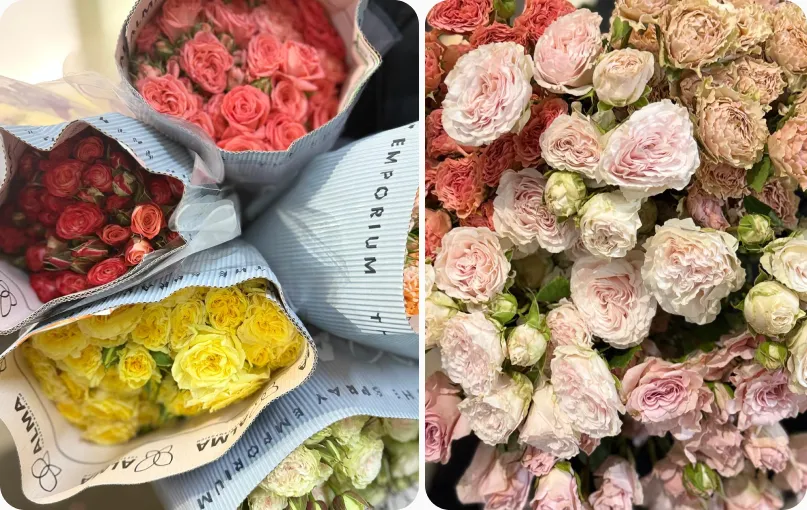
New varieties follow the same pattern. In recent months, Ecuadorian farms have been actively expanding their range of spray roses. The Fibonacci and Be series, along with other new releases, immediately caught buyers’ attention. However, production of new varieties always grows gradually. While volumes remain small, market demand often exceeds supply. That is why new varieties are often sold at prices above the average.
This trend has been particularly noticeable in recent weeks. With a large number of offerings, certain varieties sell out literally within the first few hours after sales open. This applies not only to seasonal demand for Playa Blanca, Princess Crown, Pink X-Pression, Powder Puff, and other garden varieties. A similar situation is observed with Lemonade, Veggie, as well as the new spray roses from the Fibonacci and Be series, whose production volumes have not yet kept up with growing demand.
Sometimes a variety is available in the morning, but just a few hours later, it is impossible to get confirmation of availability. There can be various reasons for this: the available stock has already been sold out, the quantity of marketable produce turned out to be less than expected after sorting, or part of the shipment was reallocated by the farm. Therefore, the list of offerings and actual availability do not always match.
To objectively assess the market situation, it is not enough to analyze only the number of availability. It is far more important to see the whole picture of the market. This is precisely the approach Daoflowers takes, analyzing availability from more than 300 farms daily and tracking the following key factors:
- which varieties are becoming increasingly difficult to confirm
- which positions sell out almost immediately after sales open
- how prices for key varieties are changing
- whether available volumes are decreasing
- which seasonal positions are seeing increased demand
Such changes are usually the first indicators of a shift in market conditions.
Thus, the total volume of supply is by no means the only indicator of market conditions. It is far more important to understand which varieties are currently available, how quickly they are selling, and whether farms can meet the required volumes.
Experience shows that the market begins to change before this becomes apparent in average prices. First, there are difficulties in securing the most demanded varieties, then available volumes shrink; and only after that does the price increase become evident to most buyers.
That is precisely why at Daoflowers, we analyze not only the number of offers but also what is happening in the market in real time on a daily basis. This approach helps our customers spot changes more quickly, find alternative solutions, and plan their purchases with greater confidence.

 Eng
Eng