The Colombian flower market is currently being influenced by several factors at once. Farms have to adapt to climate changes associated with El Niño, rising labor costs, peso strengthening, and increased production costs.
For customers, this is already reflected in the prices of some positions. There is no single reason for the price increases: the impact of these factors varies significantly depending on the type of product. Therefore, it is important to consider not only the fact that prices are rising, but also the underlying causes. This will largely determine whether the change is temporary or will persist for the long term.
Carnation: Price Increases Are Linked to Production Costs
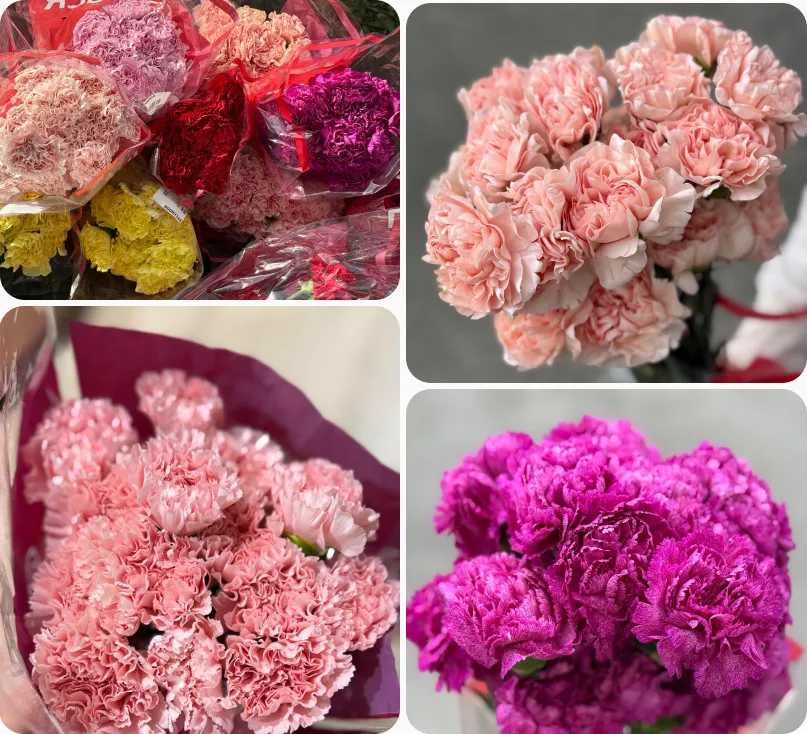
The most notable price increase is currently being seen in carnation. This is a labor-intensive crop: a significant portion of the work throughout the entire cycle is done by hand - from plant care and harvesting to sorting, processing, and preparation for export.
In Colombia, labor costs have risen significantly. An additional factor has been the reduction in the workweek: as of July 15, 2026, the standard workweek is 42 hours without a proportional reduction in wages. At the same time, pay rates for night, Sunday, and holiday shifts have increased. For farms, this means a higher cost per labor hour and, consequently, a higher cost of production.
In the case of carnation, the issue at hand is now primarily the rise in production costs, rather than a short-term surge in demand. Therefore, even if demand stabilizes, prices may not return to their previous levels: labor costs have already changed and will continue to affect production cost.
Peso Exchange Rate: Additional Pressure on Prices
Flowers are sold on the international market in dollars, while a significant portion of the plantations’ expenses - salaries, transportation, packaging, and other domestic costs - are denominated in pesos.
In 2026, peso strengthened significantly. As a result, the same dollar revenue, once converted, yields less national currency for the farms, while domestic expenses continue to rise. This creates additional pressure on prices.
And this applies not only to carnations. To one degree or another, the currency factor affects various types of Colombian flowers.
At the same time, the exchange rate is a variable factor. If peso weakens, pressure from this source may ease. With rising labor costs, the situation is different: this represents a change in the very structure of expenses.
Hydrangeas: Climate and Seasonal Demand
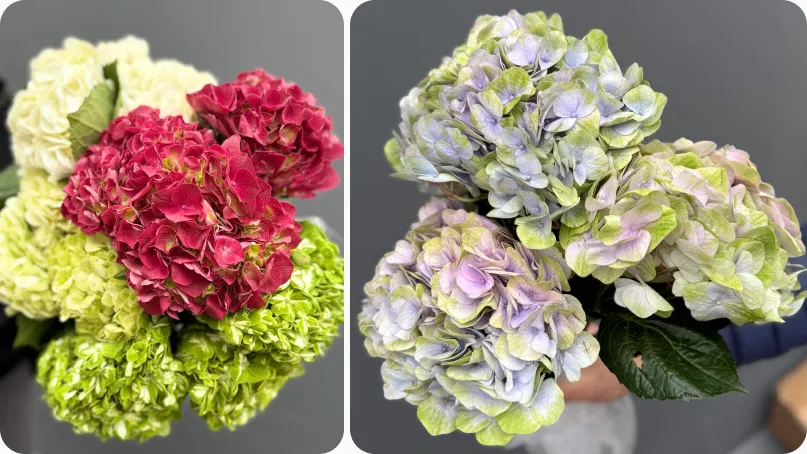
Not all Colombian hydrangeas are currently reaching their usual flower head size. El Niño is accompanied by higher temperatures, intense solar radiation, and reduced or absent rainfall. These conditions affect hydrangeas: flower development slows down, and the actual flower head diameter may be smaller than usual for the specified grade. We need to be prepared for this.
This is particularly noticeable with the natural varieties Green and Shocking Blue. Under current conditions, they may reach a maximum grade of Premium, while the actual head size is sometimes several centimeters smaller than usual.
Therefore, when placing an order now, it is best not to rely solely on the specified grade. The actual head size that the farm can provide at any given time is just as important.
There is also a seasonal factor. Once the hydrangea season in the Netherlands ends, the European market’s interest in Colombian products increases. This further affects the price of in-demand colors and sizes. At the same time, the current price increase appears to be more of a market adjustment.
For other types of flowers, price increases remain insignificant or are virtually unnoticeable. The situation remains dynamic, so we continue to monitor the market closely.
What Is Holding Back Growth and Where to Look for Alternatives
Future price trends for Colombian products will also depend on supply from other countries. If Ecuador and Kenya are able to meet demand in sufficient quantities at comparable quality and price levels, this may hold back further increases in Colombian prices.
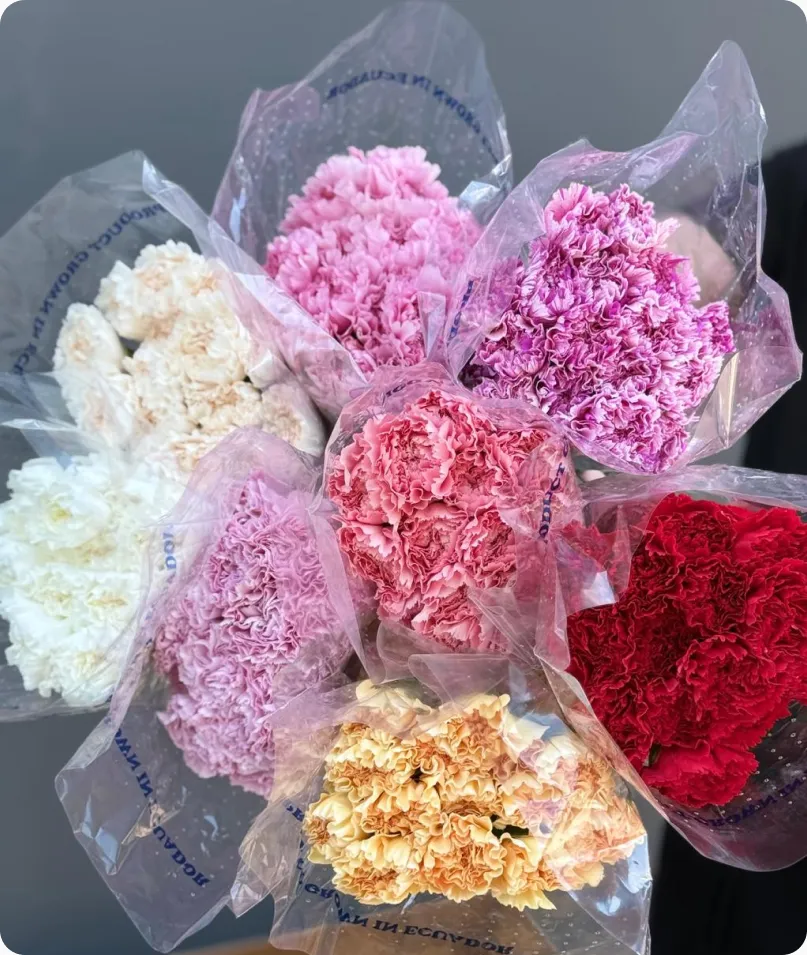
This is particularly noticeable with carnations. Customers are increasingly turning their attention to Ecuador: the production base there is expanding, more farms are appearing, and with them - a wider range of offerings across various specifications and quality levels.
However, it is not entirely accurate to compare Colombia and Ecuador based solely on the price per flower. Packaging, the number of stems per box, and, consequently, shipping costs - all play a role.
Ecuadorian growers also use the QB (Quattro Box) for packaging carnations. However, a single such box holds a larger number of stems - approximately 500. As a result, transportation costs are spread across a larger volume of product, and the logistics cost per stem is lower.
Therefore, given the current fluctuations in prices for Colombian carnation, it is important to evaluate not only the FOB price but also the total cost of delivery, taking into account quality, product specifications, the number of stems per box, and logistics. Ultimately, the choice depends on the specific need: for one customer, price will be the deciding factor; for another, it will be the flower’s characteristics, packaging, or the total cost of logistics.

 Eng
Eng