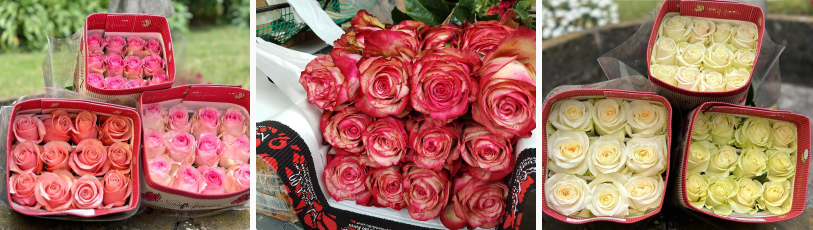
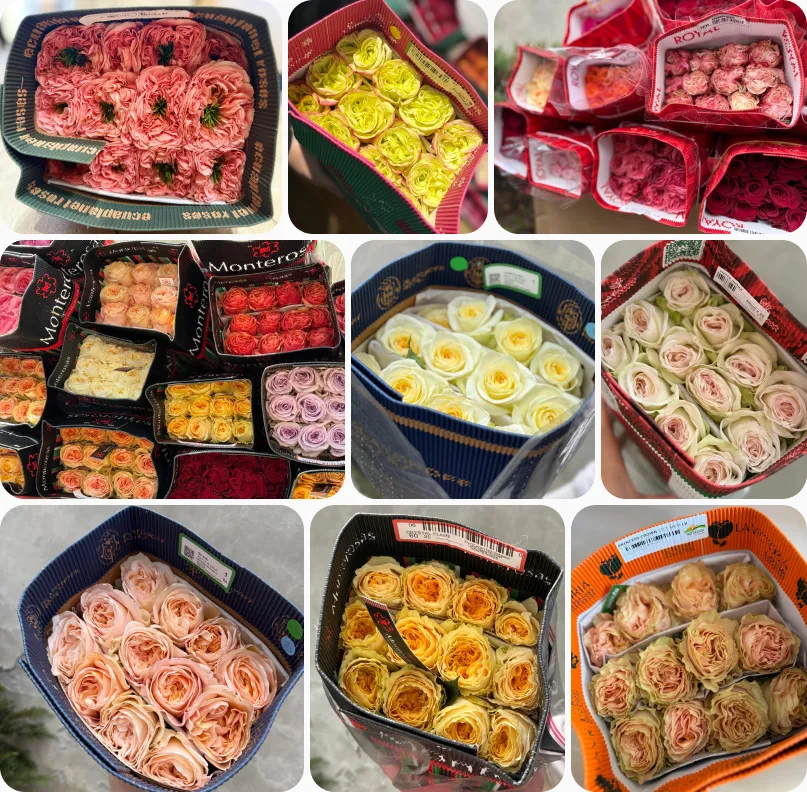
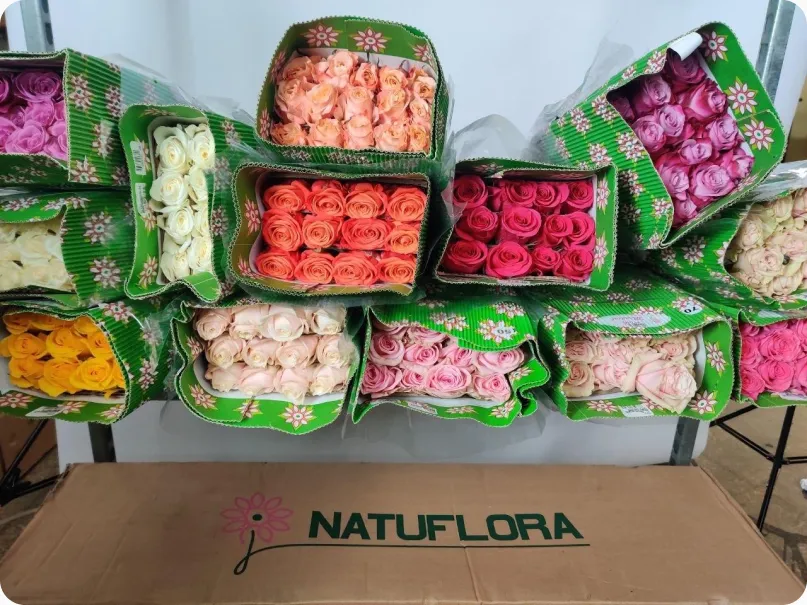
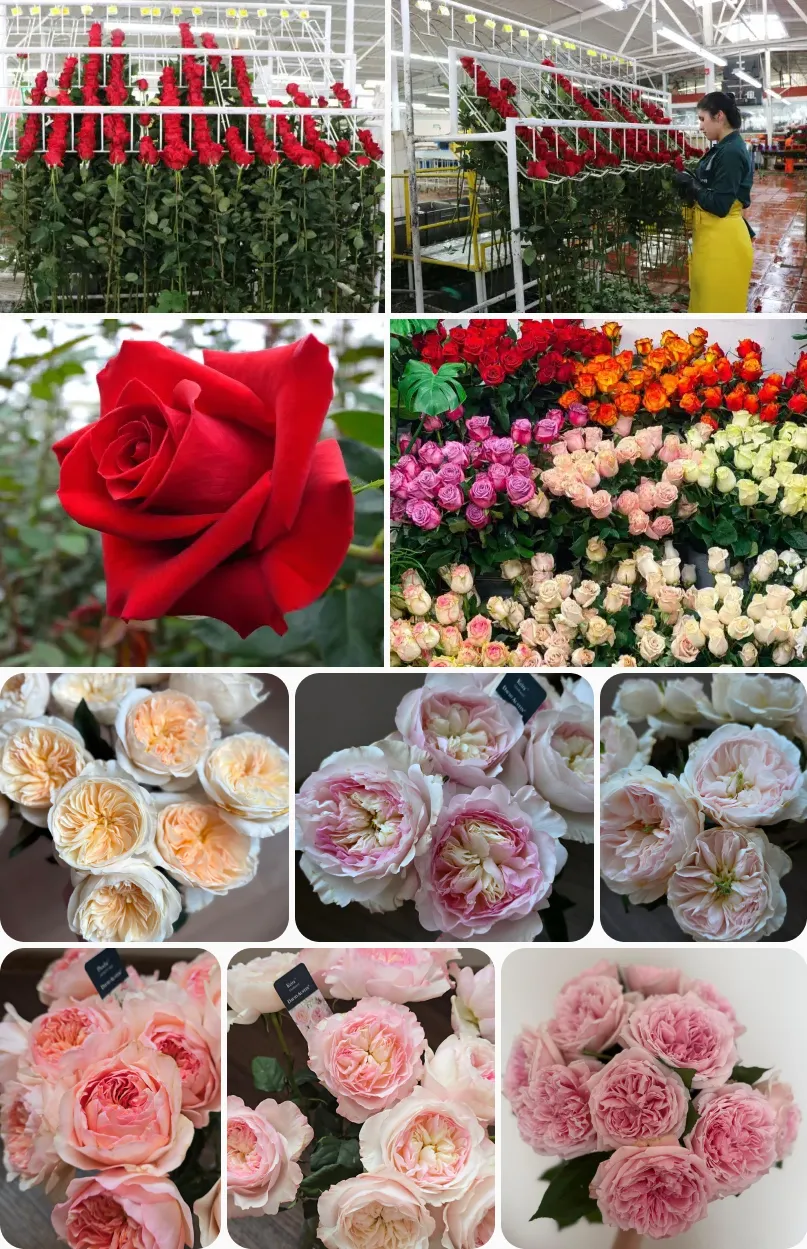
Daoflowers offers a systematic approach to purchasing roses, drawing on our experience working with leading growers in Ecuador, Colombia, Kenya, and Ethiopia. We support our customers at every stage - from selecting the variety to agreeing on delivery terms - ensuring transparency and reliability throughout the process.
MINIMUM ORDER FOR ROSES
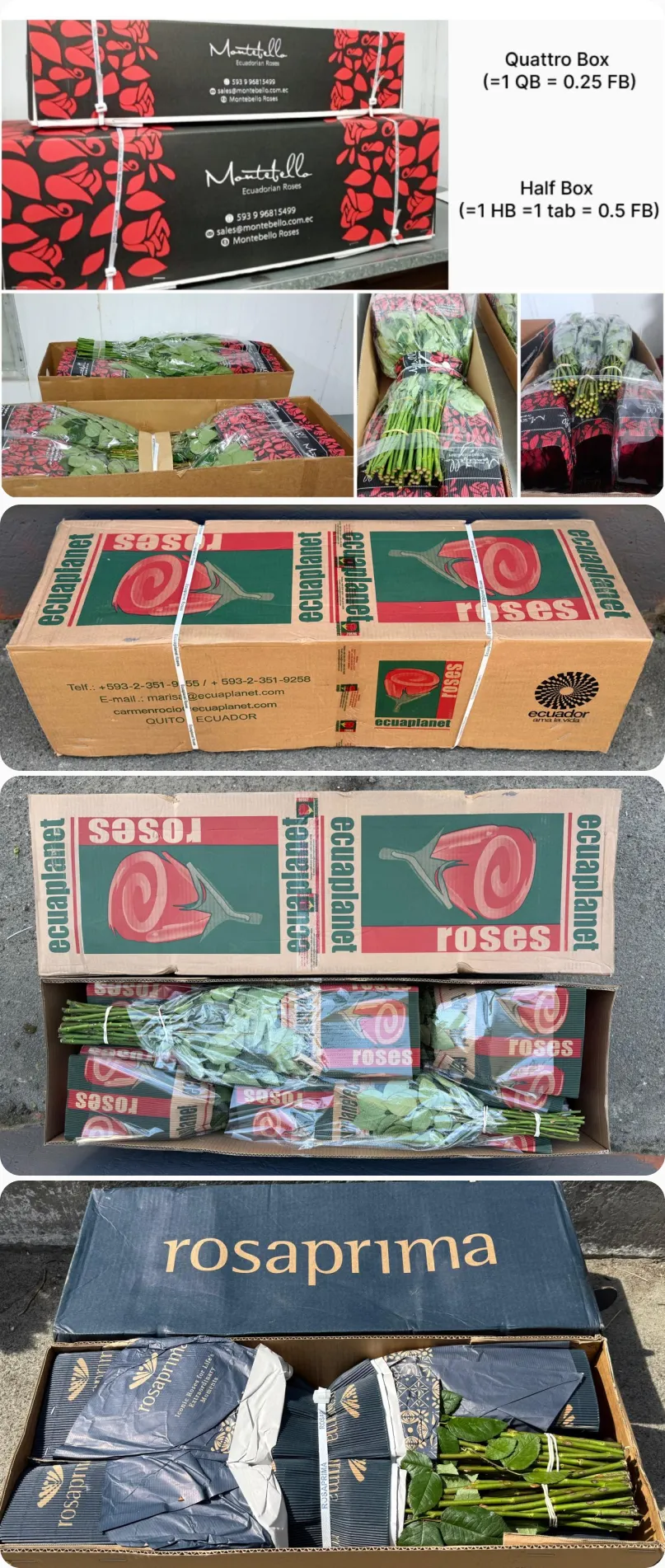
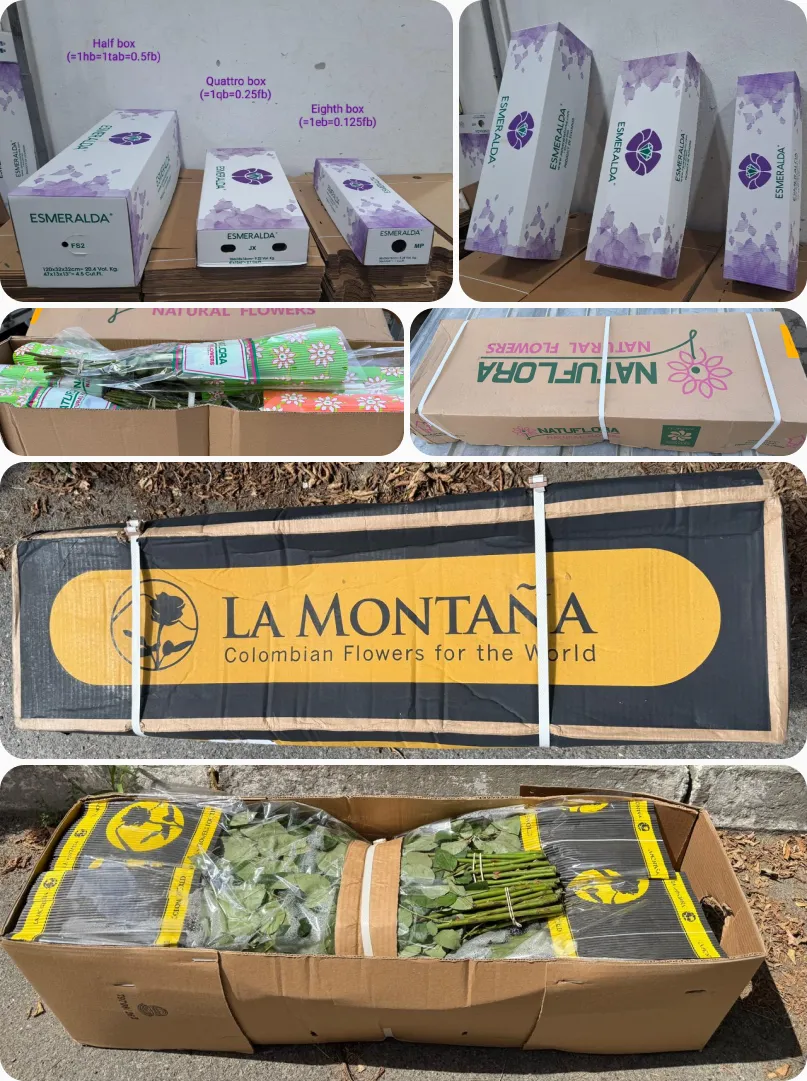
- Ecuador: 1 Quattro Box = 1 QB = 0.25 FB
- Colombia: 1 Quattro Box = 1 QB = 0.25 FB
- Kenya: 1 Small Jumbo Box = 1 SJB
- Ethiopia: 10 Small Zim Boxes = 10 SZBs from a single farm (in the case of a consolidated order from different customers: 1 Small Zim Box = 1 SZB; please check with your manager)
PACKAGING
ECUADOR
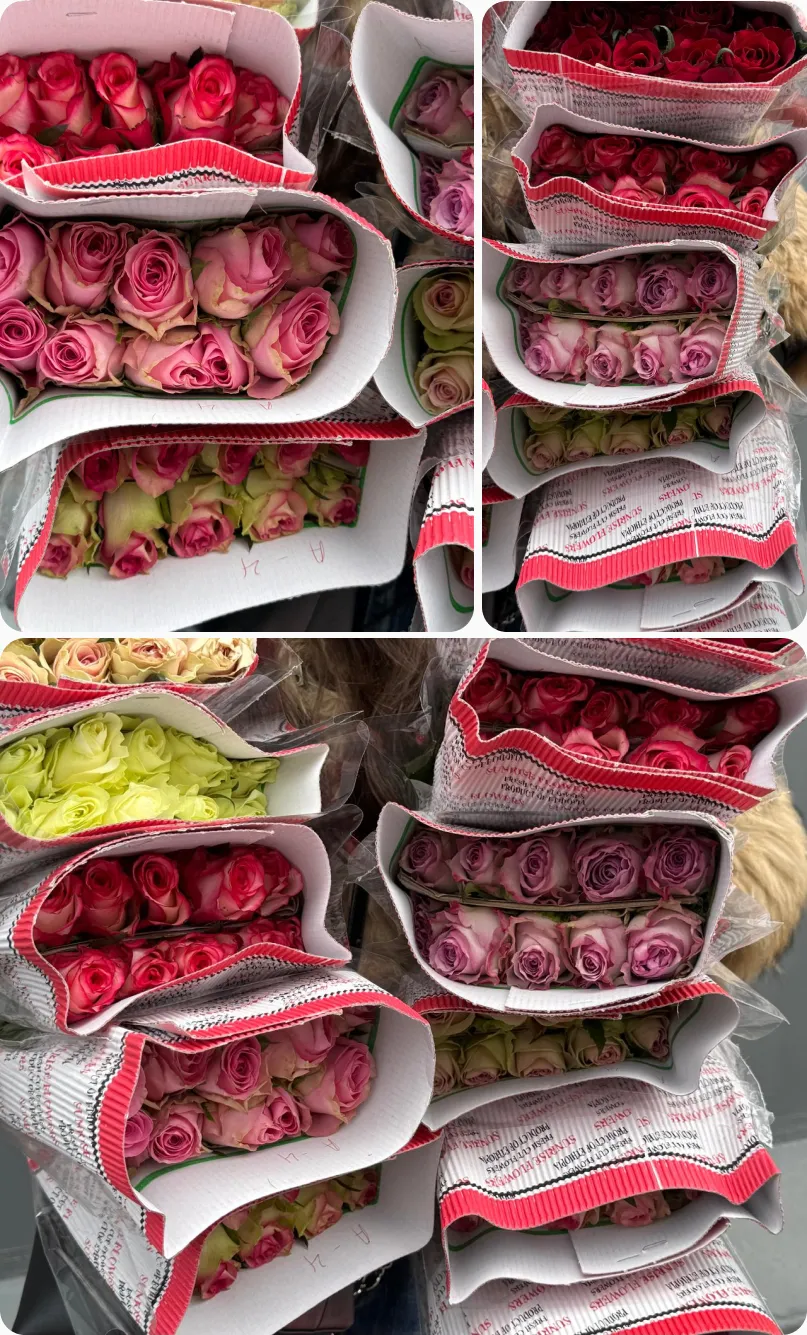
Standard bunch: 25 stems
- Rare options: 20 stems/bunch (occur infrequently)
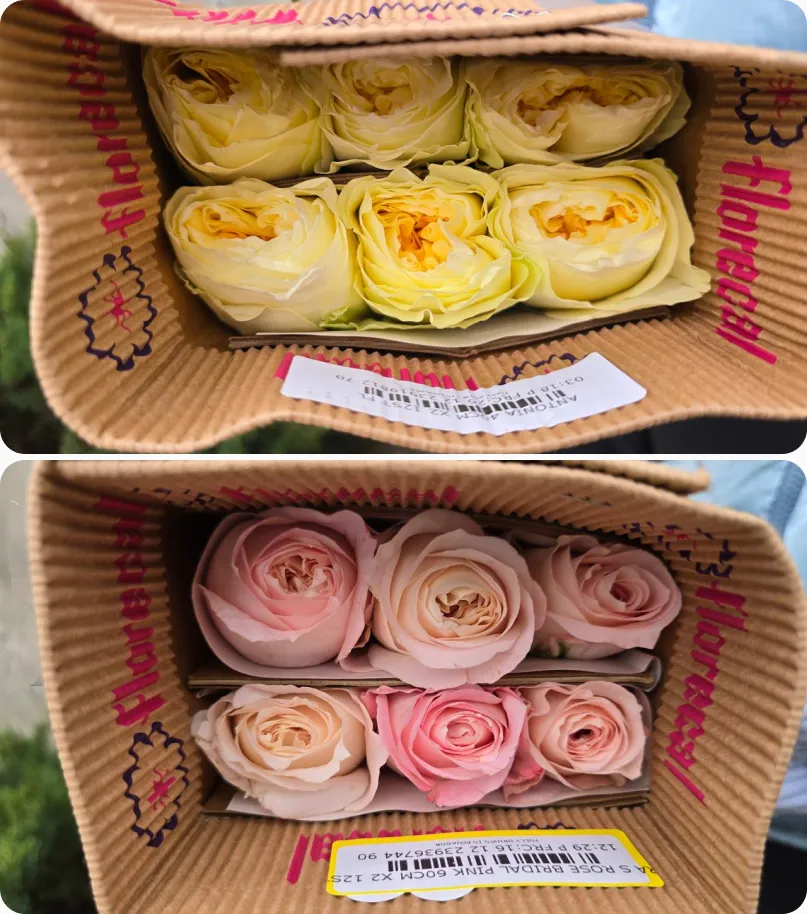
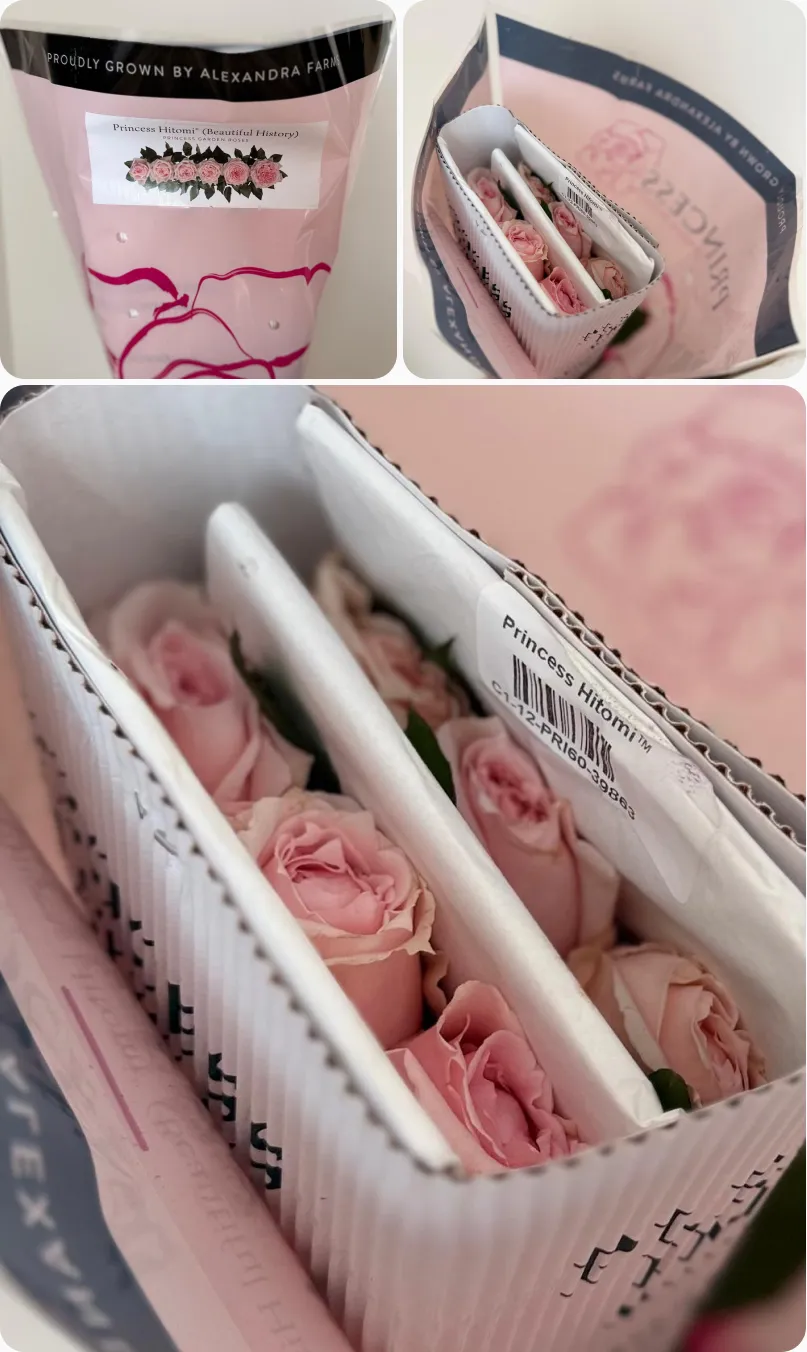
- Exclusive garden varieties: 12 stems/bunch (e.g., RP Serendipity, Aurora Gardens, etc.)
- Reason: delicate structure and tenderness of the bud
- Purpose: more careful transportation and preservation of quality
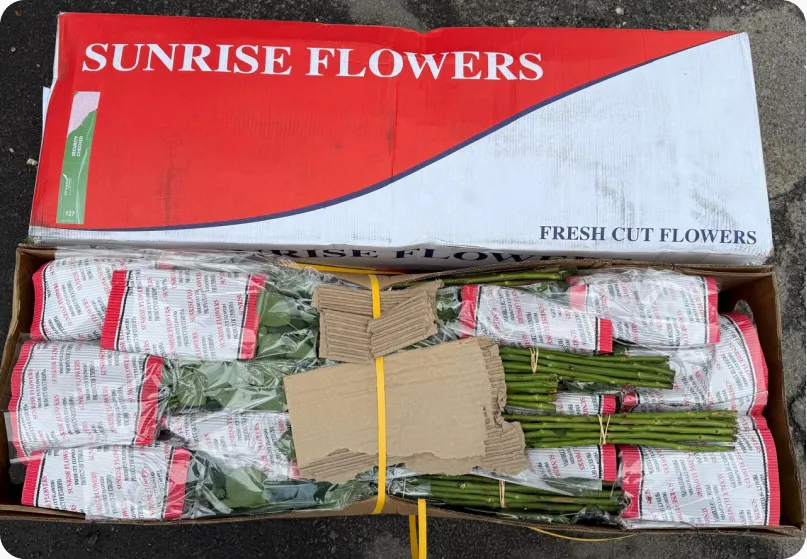
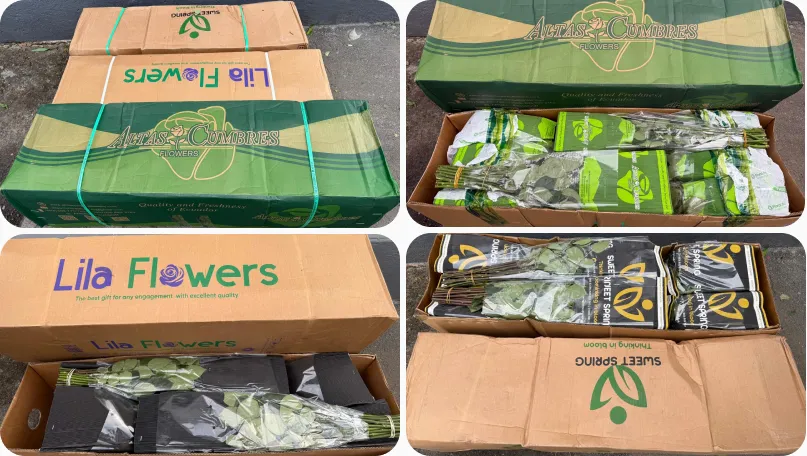
Box types for packing roses from Ecuador:
- HB (Half Box)
- QB (Quattro Box)
Average packing by length (25 stems/bunch)
40-50-60 cm :
- HB: 300 / 350 / 400 / 500 stems
- QB: 100 / 125 / 150 stems
70 cm :
- HB: 250 / 300 / 350 / 400 stems
- QB: 100 stems
80 cm :
- HB: 200 / 250 / 300 / 350 / 400 stems
- QB: 100 stems
90 cm and above:
- HB: 200 / 250 / 300 stems
- QB: rarely used.
Average packing by length (12 stems/bunch)
(mainly exclusive garden varieties; generally only QB and short lengths)
40-50-60 cm:
❗ Important:
- Many farms do not typically pack roses 80 cm+ in QB, as there is a high risk of damage during transport
- Varieties with large buds are also often unsuitable for packing in QB
COLOMBIA
Standard bunch: 25 stems
- Exclusive garden varieties and series: 12 stems/bunch (due to the delicate structure of the bud, these require more careful packaging to preserve quality during transport)
Box types for packing roses from Colombia:
- HB (Half Box)
- QB (Quattro Box)
- EB (Eighth Box) (for exclusive garden varieties only)
Average packing by length (25 stems/bunch)
40 cm:
- HB: 300 / 350 / 400 stems
- QB: 100 stems
50 cm:
- HB: 300 / 350 stems
- QB: 100 stems
60 cm:
- HB: 300 / 350 stems
- QB: 100 stems
70 cm:
- HB: 250 / 300 stems
- QB: 100 stems
80 cm and above:
- HB: 200 / 250 / 300 stems
- QB: 100 stems
Average packing by length (12 stems/bunch)
(exclusive garden varieties and lines; typically QB, less commonly EB and short lengths)
40-50-60 cm:
- QB: 72 / 88 / 96 stems
- EB: 54 stems
❗ Important:
- Many farms do not usually pack roses 80 cm+ in QB, as there is a high risk of damage during transportation.
- Varieties with large buds are also often unsuitable for packaging in QB boxes.
KENYA
Standard bunch: 10 stems
Box types for packing roses from Kenya
The number of stems in an SJB box may vary depending on length and farm:
- 40 cm: 300 - 600 stems
- 50 cm: 250 - 500 stems
- 60 cm: 200 - 400 stems
- 70 cm: 150 - 300 stems
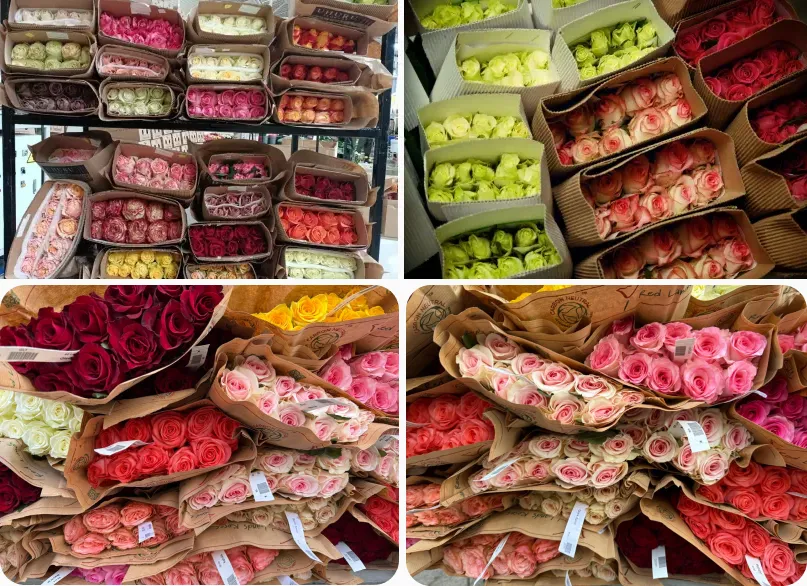
At the same time, Kenyan products often visually differ in having a simpler packaging design compared to those from Ecuador and Colombia.
ETHIOPIA
Standard bunch: 10 stems
Box types for packing roses from Ethiopia
The number of stems per SZB box varies by farm and may differ:
- 50 cm: 140 - 260 stems
- 60 cm: 120 - 240 stems
Ethiopian roses also feature simpler packaging compared to products from Ecuador and Colombia.
PACKING VARIATIONS
Factors affecting the number of stems per box:
- bud size (variety)
- stem length
- market conditions (high/low demand)
- availability of specific box types at the farm
Upon request:
- various packaging options can be selected
- the optimal number of stems per box can be chosen. It is recommended to coordinate this in advance with the manager.
RECOMMENDATIONS FOR CHOOSING BOX TYPES
For Ecuador and Colombia, the HB (Half Box) is considered the optimal and most popular format among our customers for purchasing roses. It has proven itself to be a convenient and practical solution both in the process of work and transportation, ensuring efficient use of space and better product preservation.
CHARACTERISTICS OF ROSES BY COUNTRY OF ORIGIN
Daoflowers offers roses from growers in Ecuador, Colombia, Kenya, and Ethiopia.
ECUADOR
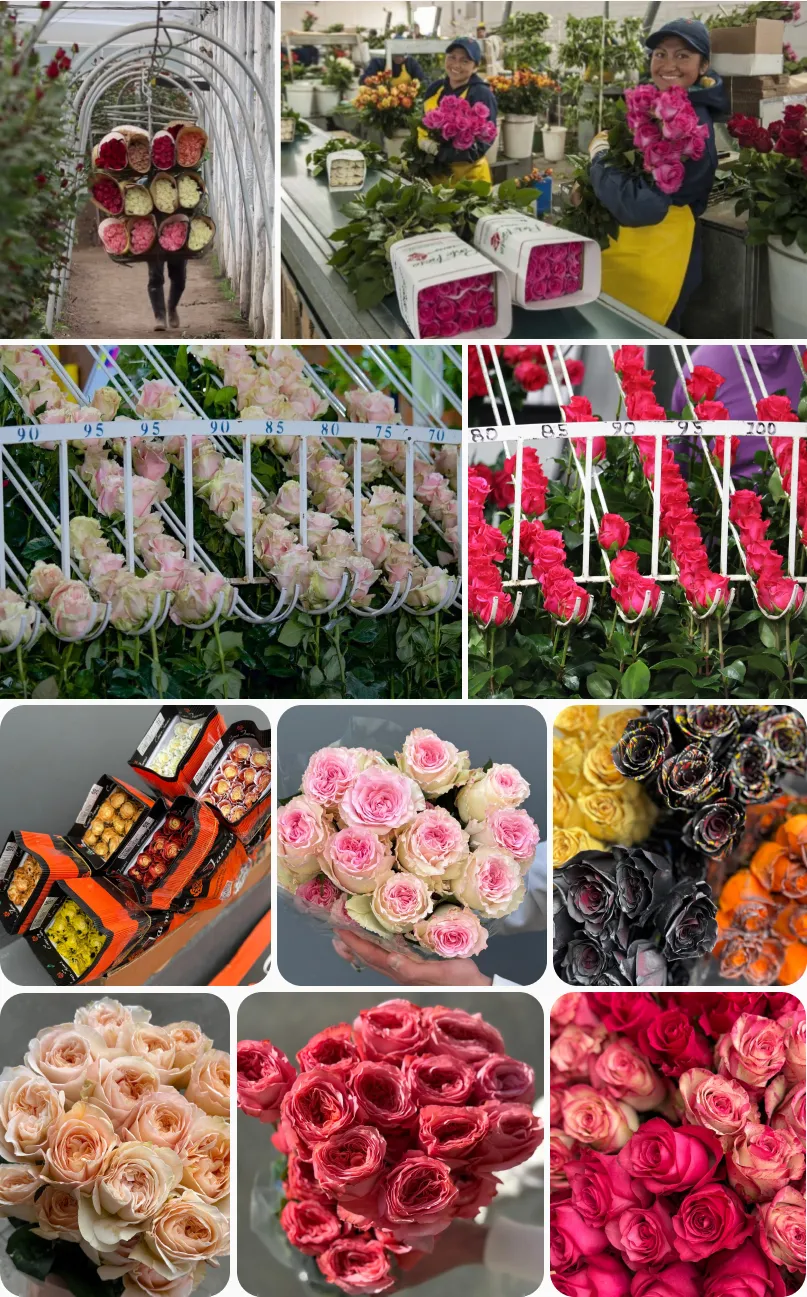
- Global market leader thanks to decades of refined cultivation techniques
- Large, dense buds with bright, rich colors
- Long, sturdy stems
- The widest range of color varieties and shades
- Leader in the production of dyed roses: unique color combinations, special holiday collections, and custom orders
- A well-developed real-time purchasing system with instant confirmation: daily offers from farms and promotions
COLOMBIA
- High quality thanks to a mild climate and fertile soil
- The Freedom variety - the standard for red roses, with large buds and rich color
- The range of color varieties is more limited compared to Ecuador, however, there are exclusive garden varieties
- Standard lengths for colored roses: 40–50 cm, less commonly 60–70 cm
- Consistent volumes on standing orders
KENYA
- Grown in conditions of abundant sunshine and rich soil
- Buds are smaller, stems are thinner and shorter, but the flowers are long-lasting and affordable
- Some high-altitude farms (around 3,000 m) approach the quality of Ecuador and Colombia, but are more expensive
- A diversity of shades, but availability is unstable; substitutions within color groups are possible
ETHIOPIA
- Africa’s second-largest flower exporter after Kenya
- Characterized by small buds and short stems (50 cm on average)
- High-altitude farms achieve quality comparable to that of Ecuador, but at a higher price
- The price-quality ratio is still inferior to that of products from Ecuador, Colombia, and Kenya
GRADATION
Actual lengths:
- Ecuador: 40–100 cm (certain varieties up to 120–130 cm)
- Colombia: 40–100 cm (the Freedom variety can sometimes reach 150–180 cm)
- Kenya: 40–70 cm
- Ethiopia: 50–60 cm
OPENING STAGE
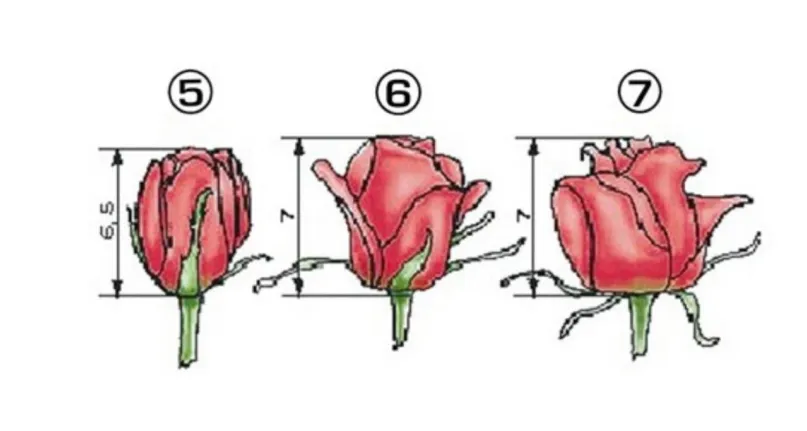
The opening stage is one of the key indicators of a rose’s quality, affecting the bud’s appearance, transport, and the florist’s work. In professional classification, a scale of stages is used, with stage 6 (semi-open bud) considered the most versatile.
Why stage 6 is considered optimal:
- semi-open bud: the shape is visible, but there is still potential for further opening
- the most balanced for export and universal use
Purchasing practices:
- Most farms standardize their harvest specifically for this stage
- This stage is most in demand by customers worldwide
- By default, Daoflowers purchases roses primarily at this stage of opening
Regional characteristics:
- Roses from Kenya and Ethiopia are often supplied at a slightly less open stage, which is considered the norm for African roses
❗ Important:
- If a different degree of opening is required, be sure to coordinate with the manager when placing your order
- Any deviations from the standard require special preparation at the farm
- Common misconception: a less open rose is cheaper
- In practice, the opposite is true - a non-standard opening stage increases costs (sorting, inspection, processing), which may be reflected in the price.
PURCHASE FORMAT
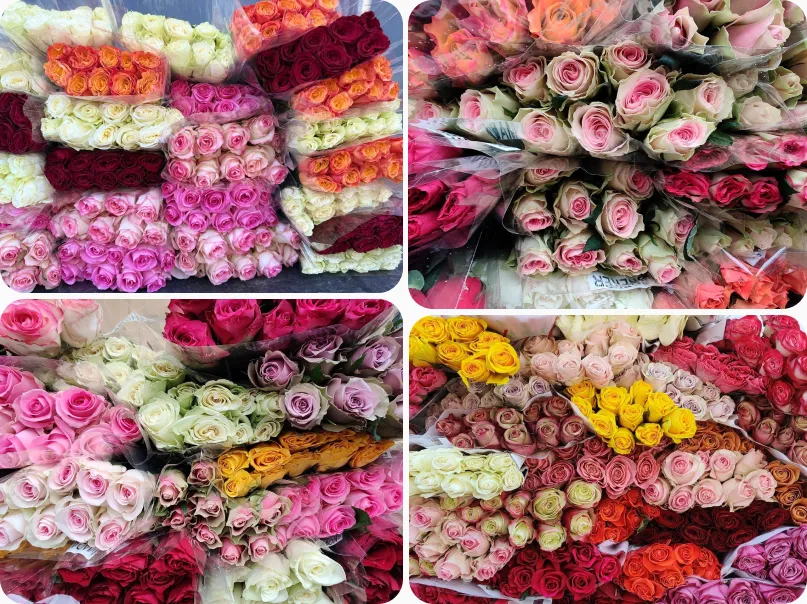
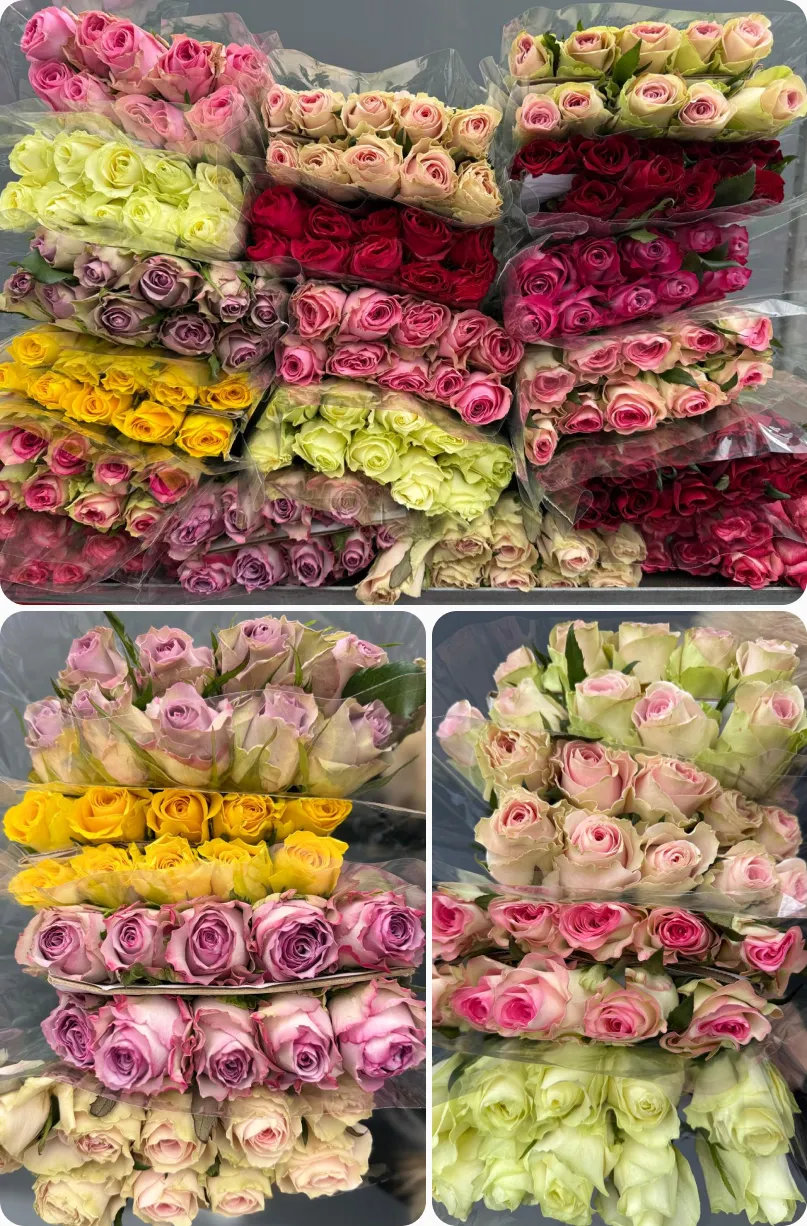
Roses are typically offered by variety and length
Roses can be ordered in several formats depending on the customer’s needs:
- by variety (one variety per box)
- mixed boxes (composed at the farm’s choice)
- mixed boxes upon the customer’s individual request (we can arrange and control for 2–3 chosen varieties to be packed in one box by the farm)
❗ Important:
The ability to compose mixed boxes upon the customer’s individual request:
- depends on the farm and availability
- requires prior approval
- is not always 100% guaranteed, but we do our best to support the process
- for complete certainty, we recommend placing a standing order: in this case, the agreed-upon farm will pack the same set of varieties for the customer every week. Please note that this standing order format may be more expensive than a regular mix selected at the farm’s choice.
PRICING POLICY
ECUADOR
- Under FOB terms, Ecuadorian farms often offer more competitive prices
- During periods of low market demand or high production, prices may be lower than those of Colombian growers.
- Prices are often more competitive even compared to Kenyan and Ethiopian suppliers.
COLOMBIA
- On average, prices are higher than in Ecuador, especially under standard terms
- Special offers and promotions are less common
- The cost is justified by the consistent quality and popularity of the Freedom variety
KENYA AND ETHIOPIA
- These are typically positioned as more affordable markets
- However, during peak production periods, Ecuador may offer lower prices than African suppliers
ORDER PLACING GUIDELINES
- Place your order in advance - a few days before the date of departure from the farm
- Please note: if your order includes popular or seasonal items, placing it in advance significantly increases the likelihood of confirmation
- Dyed roses - require several days to prepare. Orders are typically accepted 4–5 days before departure from the farm, depending on the complexity of the dyeing process, the season, and current market demand
Also:
- Daily offers on our online trading platform
- Up-to-date availability and special offers from over 250 rose growers are always available, allowing you to quickly find the best purchasing options.
AVAILABILITY
Roses from Ecuador, Colombia, Kenya, and Ethiopia are available year-round.
The selection depends on:
- required quality parameters
- length
- budget
- segment (mass market or premium)
One country may be substituted for another in the event of a shortage.
The Daoflowers team is always ready to:
- find the best option
- suggest alternatives
- provide advice on packaging and quality
Choosing roses for purchase is always a balance between quality, stem length, price, and market segment. It is important to consider production characteristics in different countries, minimum order quantities, bud opening stage, and pricing policies. These factors determine how successful the order will be and how fully it will satisfy the customer’s needs.

 Eng
Eng